
Indian Youth Protesters Mobilize for Nationwide Demonstrations Amid Government Crackdown
AI-assisted original article by One News Desk, based on reporting from GMA News Online. Featured image credited to the source.
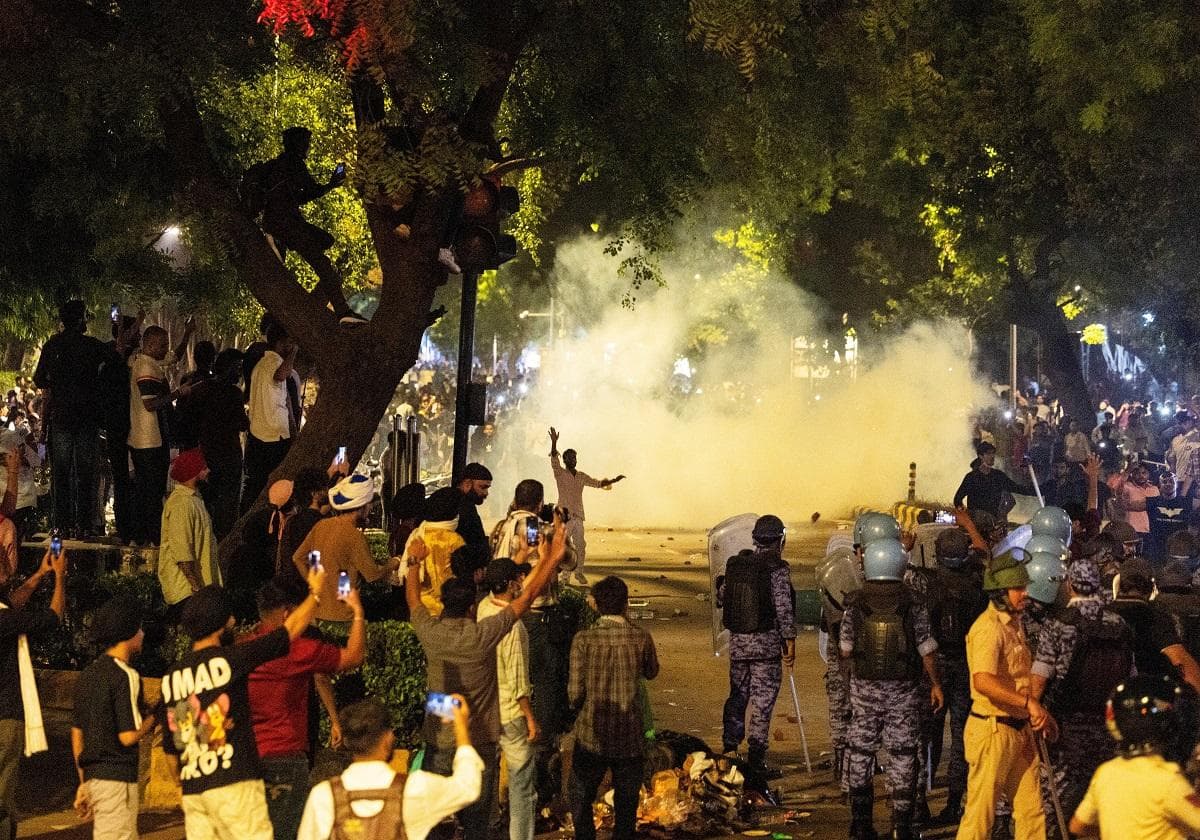
In a significant escalation of unrest, youth protesters across India have called for nationwide demonstrations, coinciding with the government's imposition of strict measures in central Delhi. The protests, led by a movement known as the Cockroach Janta Party (CJP), are primarily aimed at demanding the resignation of the education minister following a scandal involving leaked medical school entrance exam papers that have affected approximately two million students. The leaks have been linked to a troubling rise in student suicides, intensifying the urgency of the protesters' demands.
The protests represent the largest challenge to Prime Minister Narendra Modi's administration since he assumed office in 2014. As the monsoon session of parliament commenced this week, opposition parties have rallied behind the youth movement, disrupting proceedings to amplify their calls for accountability. This situation marks a critical political crisis for Modi's government, which began its third term in 2024.
In response to the mounting tensions, the government made a renewed appeal for dialogue with the protesters. However, the protesters have remained resolute, organizing peaceful demonstrations to express solidarity with fellow students who have alleged police brutality during a recent march on parliament that drew tens of thousands of participants.
By Thursday afternoon, thousands had returned to the Jantar Mantar protest site in Delhi, brandishing anti-government placards and chanting slogans, all under the watchful eye of heavy security forces. Reports indicate that protests have also spread to other major cities, including Ranchi, Pune, Thiruvananthapuram, and Kolkata, signaling a nationwide movement.
In a bid to control the situation, authorities in Delhi have shut down 16 metro stations in and around the central areas where protests are concentrated, causing significant disruption for commuters. Additionally, the government has ordered telecom companies to suspend mobile internet services in the vicinity, a move that not only hampers the protesters' communication but also affects local businesses reliant on digital transactions.
The New Delhi Traders Association has advised all businesses in the Connaught Place area, a bustling commercial district, to close early due to security concerns. These measures are perceived as attempts by the government to stifle the protests and prevent further violence, which has already seen clashes between protesters and police.
On Wednesday night, over 10,000 individuals gathered at the Jantar Mantar site, where some protesters reportedly clashed with police, throwing stones and plastic bottles, resulting in injuries to several officers. Earlier in the week, during the march on parliament, police employed tear gas and batons to disperse the crowds, escalating tensions further.
In a public address on Thursday, Modi announced plans to establish special courts to expedite the prosecution of those involved in the exam paper leaks, marking his first official response to the ongoing crisis. He emphasized the importance of youth welfare, stating, "Nothing is more important than the welfare and future of our youth!" on social media platform X.
However, the CJP has dismissed the proposal for special courts, arguing that it fails to address the root causes of the problem. CJP spokesperson Ashutosh Ranka questioned the effectiveness of such courts, stating, "Fast-track courts are set up in this country for every other issue, but whether those fast-track courts have actually solved those issues—you know the answer to that question, and so do we."
The CJP movement began as a form of online satire, initially attracting only a few hundred participants. Its rapid growth reflects widespread frustrations among young Indians regarding job scarcity and the recurring issue of exam leaks. Prominent Bollywood figures, including Salman Khan, Alia Bhatt, and Kareena Kapoor, have expressed their support for the protesters on social media, highlighting the significance of youth activism in advocating for change.